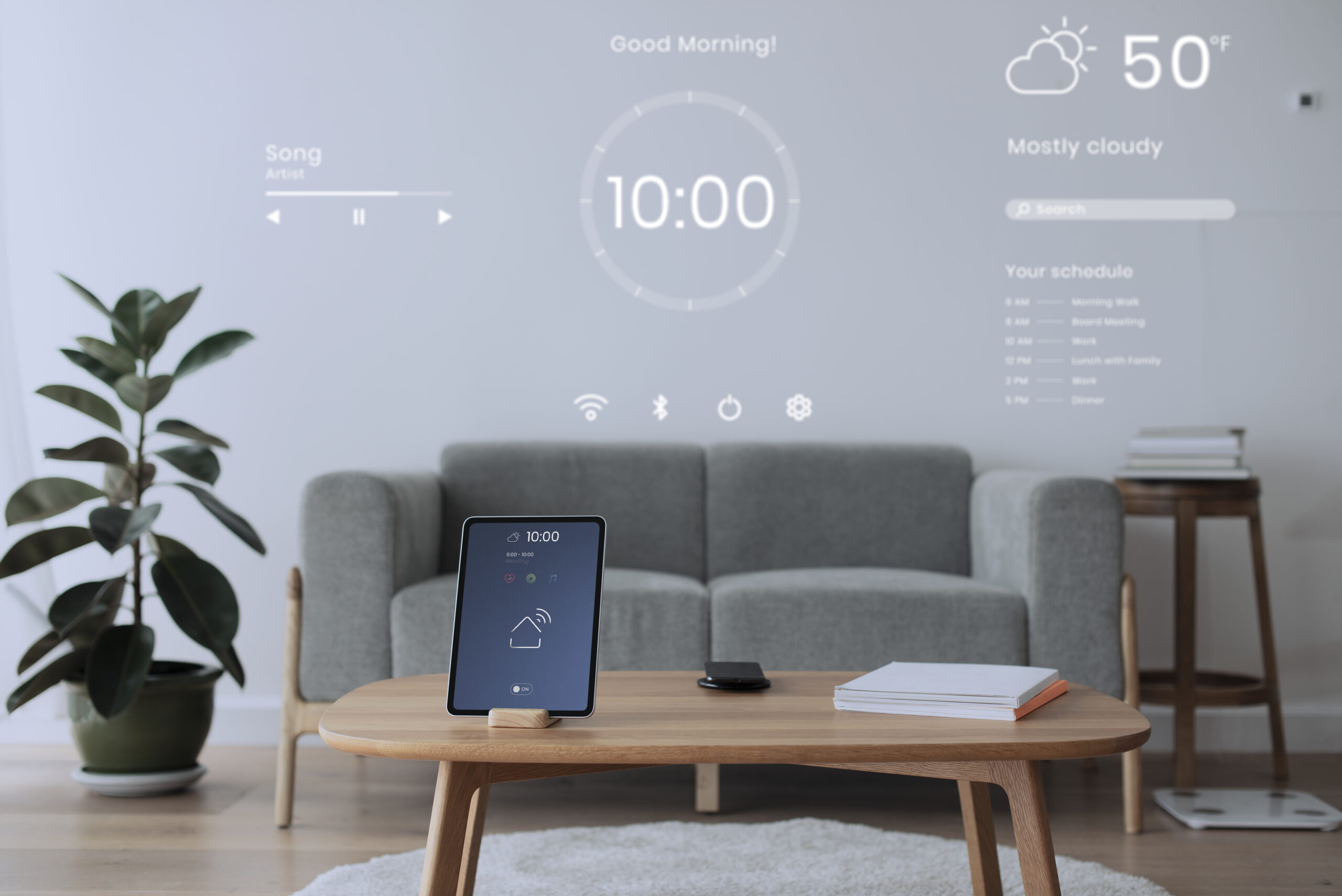
Imagine walking through your front door and the lights adjust, the temperature shifts, and your favourite playlist starts. Not because you asked. Because your home just knows.
That scenario sounds like something from a film, but it’s increasingly how smart homes work in 2026. The latest home automation isn’t waiting for you to tap an app or shout a command. It’s learning your routines and making adjustments on its own.
This is the shift from smart homes that respond to smart homes that anticipate. And while it’s easy to find it slightly unsettling, the practical benefits are hard to argue with.
Your home as a household manager
The traditional smart home worked like a remote control. You opened an app and told things what to do. Useful, but not exactly ‘smart.’
The next wave flips that. AI-driven assistants are beginning to function as virtual household managers, coordinating heating, lighting, appliances, entertainment, and security automatically.
In practice: the system notices you arrive home at 5:45pm on weekdays. By 5:30, it warms the house, turns on the hallway lights, and adjusts the living room to your preferred brightness. On weekends, when your pattern differs, it adapts. Nobody programmed this. The system figured it out.
Vivint’s 2025 trends report described this as the move from simple automation to genuinely personalised experiences. Your home stops being devices you control and becomes an environment that responds to you.
Sun-tracking shades and sensors that learn
Some implementations are surprisingly elegant. Lutron’s Natural Light Optimisation uses your home’s exact GPS coordinates to calculate the sun’s position at any moment. Motorised shades adjust throughout the day based on actual sun position relative to each window.
The result is natural light management that keeps rooms bright without glare, reduces heat gain in summer, and maximises warmth in winter. It’s the kind of thing you wouldn’t notice until someone turned it off.
On a simpler level, smart thermostats learn when you’re home, when you’re not, and what temperature you prefer. Rather than running on a timer you set once and forget, they adapt to your actual life.
The privacy conversation worth having
If ‘learning your habits’ makes you uncomfortable, that’s reasonable. The key distinction is between local processing and cloud processing.
Local processing means AI runs on hardware in your home. Your routines and commands never leave your property. Josh.ai has built its platform around this: all processing happens on-device.
Cloud processing means data travels to remote servers. This is how most mainstream assistants work. More powerful AI, but your data exists on someone else’s infrastructure.
According to Deloitte, 65% of consumers are concerned about smart home device security. The answer isn’t avoiding smart tech. It’s understanding how your system handles data and choosing what you’re comfortable with.
Practical steps: check for local processing options, review what data is collected, use strong passwords and MFA on smart home accounts, and keep firmware updated.
Smart without the creepy
The best smart home experiences feel helpful, not invasive. Lights that adjust because you always dim them at 8pm. Heating that turns down because you’ve left. A security system that knows the difference between your dog and a stranger.
Dial a Nerd helps you build a smart home that’s clever and secure. We’ll recommend systems that match your privacy comfort level, set everything up to work together, and make sure you understand what your home is doing and why. A smart home should make you feel looked after, not watched.